
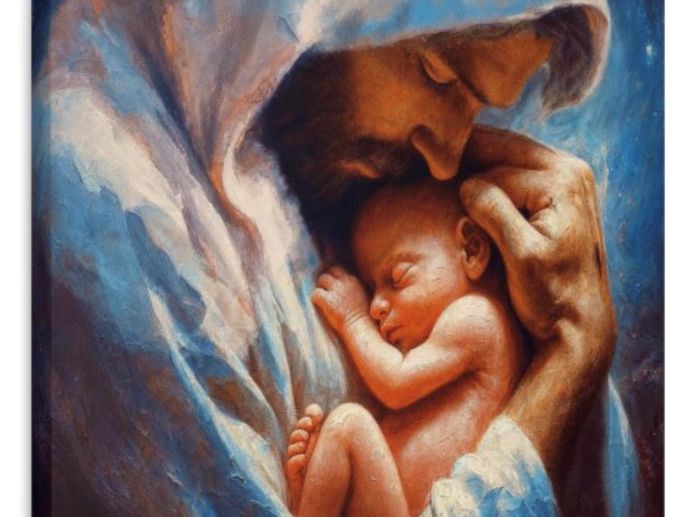
Intricately Woven and Safely Held: A Journey Through Psalm 139:13–24. By Melinda Skau.
Have you ever looked in the mirror or deep within your own soul and wrestled with a quiet sense of inadequacy? Most of us eventually face those haunting questions: Who am I? Do my flaws disqualify me from being loved? If people truly saw my hidden struggles and chaotic thoughts, would they turn away? We carry a deep human desire to be truly known and understood, yet we may live in fear of being completely exposed.
Psalm 139:13–24 answers these core questions of the soul with a profound, life-altering truth: you are already fully exposed to your Creator, and you are deeply loved. Written by King David, this ancient poem reminds us that our identity is not based on our performance. Instead, it anchors our security in the fact that we are intricately made, entirely known, and safely held by the One who designed us.
A few years ago, the truth of this Psalm came alive for me through a dear friend named Sunita. She was working as a nurse and was happily married to her husband, Ravi, an anesthetist. They already had a baby boy and a very full plate, balancing a busy dual-professional marriage while living with extended family.
When Sunita discovered she was unexpectedly pregnant again, she felt completely unready. In her native culture, there were no religious or societal rules against abortion; it was simply seen as a practical way to handle an overwhelming situation.
Conflicted and confused, she came to me for advice. I felt naively inexperienced to advise her situation, so I empathetically listened to her hopes, fears, and cultural challenges. But beneath my quiet exterior, I was desperately and intensely crying out to God in my heart for the precious, unformed life inside of her. I couldn’t find the right words to say to Sunita, but God heard the silent ache of my soul.
The next morning, during my devotions, God answered that heart cry with beautiful clarity. He prompted me to print out Psalm 139:13–18 on lovely parchment paper, tie it with a pretty ribbon, and provide it as a gift for my friend. Sunita didn’t view the Bible as inspired Scripture, but she loved poetry.
What followed was a breathtaking miracle. Touched by those poetic words, Sunita chose to keep the pregnancy, and she later delivered healthy twin girls. God didn’t just answer my prayer for one hidden life—He miraculously answered it for two. He knew each of the lives He was weaving together in secret. Today, Sunita and Ravi are bountifully blessed by their three intelligent, bubbly, beautiful children and could not imagine life without any one of them.
Let’s look at the rich Hebrew meanings hidden within the very verses that changed Sunita’s family forever, using the NASB and ESV.
Part 1: The Master Weaver (Verses 13–16)
“For You created my innermost parts; You wove me in my mother’s womb. I will give thanks to You, for I am fearfully and wonderfully made…” (Psalm 139:13–14)
David uses vivid metaphors to describe how intimately God designs every single individual.
- “Innermost parts” / Kilyah (כִּלְיָה): In ancient Hebrew thought, this referred to the emotional and moral control center of a person—the seat of the soul. God didn’t just form your physical shell; He designed your deepest personality.
- “You wove me” / Sakak (סָכַךְ): This word carries the imagery of a master artisan weaving an intricate tapestry (translated as “knit me together” in the ESV). You are a deliberate, hand-woven masterpiece.
- “Wonderfully made” / Palah (פָּלָה): This root means to be set apart or uniquely distinguished.
David adds that God’s eyes saw his “unformed substance” (golem) in the secret place (v. 15–16). Every single day ordained for your life was written in His book before it ever began. Your past, present, and future are entirely secure in His hands.
Part 2: The Weight of Divine Thoughts (Verses 17–18)
“How precious also are Your thoughts to me, God! How vast is the sum of them! If I should count them, they would outnumber the sand…”
Overwhelmed by God’s meticulous care, David pauses to worship.
- “Precious” / Yaqar (יָקָר): This means weighty, rare, or magnificent. God’s thoughts toward you are not fleeting or casual; they possess immense spiritual weight.
God’s loving thoughts toward you outnumber all the grains of sand on every shoreline on earth. David concludes: “when I awake, I am still with You.” Sleep may interrupt our consciousness, but it never interrupts God’s presence.
Part 3: The Reality of Opposition (Verses 19–22)
“O that You would slay the wicked, God; depart from me, therefore, men of bloodshed. For they speak against You wickedly…”
Suddenly, the tone shifts dramatically and feels jarringly out of place. David goes from meditating on beautiful tapestries to crying out against evil men. Why?
When you truly grasp the value of human life as designed by God, you naturally oppose anything that seeks to destroy it. David is looking at a broken world full of cruelty and rebellion against the Creator.
When reading verse 19, with its sobering mention of the “shedding of blood,” I gently wondered: could this verse also serve as a quiet window into God’s perspective on abortion? If every life is an intricately hand-woven work of art, then any threat to that unformed life deeply matters to the Creator.
- “Hate” / Sane (שָׂנֵא): In verse 21, David asks, “Do I not hate those who hate You?” In the ancient Hebrew context, sane carries a covenant-based meaning: to reject, turn away from, or stand in complete opposition to. David is aligning his loyalty fully with God’s righteousness and the protection of what He has made.
Part 4: The Vulnerable Prayer (Verses 23–24)
“Search me, God, and know my heart; put me to the test and know my anxious thoughts; and see if there is any hurtful way in me, and lead me in the everlasting way.”
David realizes it is easy to point fingers at the evil outside of us, but much harder to confront the brokenness inside of us. He ends by opening his soul to God.
- “Search me” / Chaqar (חָקַר): This means to examine thoroughly or dig deep. David invites God to leave no stone unturned.
- “Anxious thoughts” / Sar’aph (שַׂרְעַף): This translates to disquieting, divided, or wrestling thoughts. No matter what anxieties you carry—whether navigating family stress or unexpected circumstances—the One who wove your soul together is the only One who can calm its internal storms.
- “Hurtful way” / Otseb (עֹצֶב): This means pain, sorrow, or idolatry. David asks, “Is there anything in my life causing pain to You, to others, or to myself?” “ Am I running to anything besides You, God, in my distress?”
- “Everlasting way” / Derekh Olam (דֶּרֶךְ עוֹלָם): The ancient, unchanging path of true life that outlasts the grave.
The Takeaway
Psalm 139 leaves us with a profound truth: You cannot hide from the One who made you, but you don’t need to. Your Heavenly trustworthy Father knows your flaws, your secret anxieties, and your mistakes—and He still pursues you with an unwavering love.
May we all have the courage to pray David’s prayer today: Search me, know my anxious heart, and lead me in Your ways of righteousness.
Companion Song Recommendation
To accompany your reflection on this passage, listen to “O God, You Search Me and You Know Me” by Chest Valley Humns and Songs, followed by “Hold Me Fast” by Aaron Shust. They echo David’s cry to be thoroughly searched, known, and led into the everlasting way.
Comments are closed